
How to Choose the Right Glass Facade for Value, Aesthetics, and the Energy Harvesting Era

In the construction and real estate industry, if structural columns and beams are considered the “bones” of a building, the facade or building envelope can be compared to the “skin” that protects occupants from weather conditions, climate, and environmental pollution.

Over the past 10 years working closely with glass facade systems, our team has witnessed the evolution of this material—from ordinary clear glass to energy-efficient glass, and today, we are entering an era where the building envelope itself can generate electricity.

In this article, we invite developers, architects, and anyone interested in facade design to explore the world of glass facades—from basic glass types and installation systems to future trends such as energy-harvesting glass—so you can select the most suitable solution for your project.

Glass Types for Facade Systems

Selecting glass does not begin with brand names or technical product codes. Instead, it begins with a fundamental question: What role does the glass need to perform for the building?
From a facade design perspective, glass used in building envelopes can generally be categorized into four groups based on function, making it easier for developers, architects, and engineers to choose the right specification.
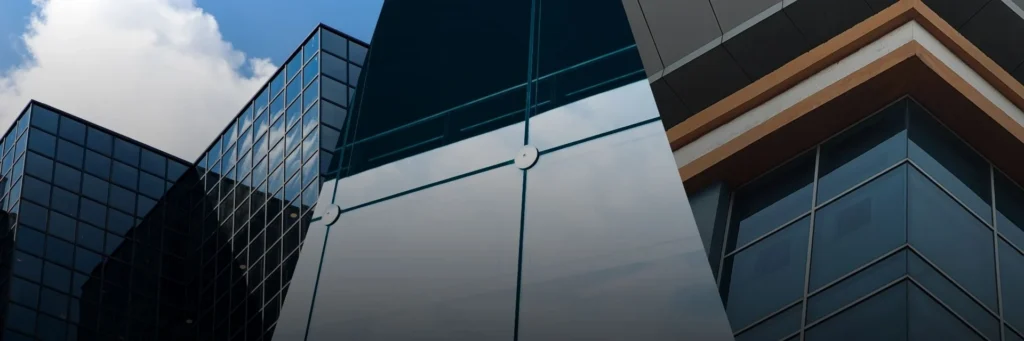
When selecting glass for a facade, it is important to understand the function of each area, such as curtain wall or window and door systems.

Basic Glass Types: Float Glass and Tinted Glass

From a facade installation perspective, glass in this category cannot be installed directly as a finished facade material. It must first undergo further processing—such as tempering or laminating—to meet safety and structural standards.

1. Float Glass: Float glass is the standard clear glass produced in flat sheets from manufacturing plants. It serves as the base material used to produce other types of architectural glass such as tempered glass, laminated glass, or coated energy-efficient glass.

2. Tinted Glass: Tinted glass refers to colored glass (gray, green, bronze, etc.) that helps reduce light transmission into the building

However, it is important to understand that reducing brightness does not necessarily mean reducing heat transfer, which is why tinted glass is often combined with other technologies when energy performance is required.

Heat and Solar Control Glass: Low-E and Solar Control Glass

1. Low‑E Glass (Low Emissivity Glass): Low-E glass features a microscopic coating designed to reduce heat transfer between indoor and outdoor environments while still allowing natural daylight to pass through.

This type of glass is commonly used in buildings aiming to improve energy efficiency and reduce air-conditioning loads.

2. Solar Control Glass: Solar control glass is designed to reduce solar heat gain and excessive brightness, making it suitable for facades exposed to direct sunlight, particularly in tropical climates.

Safety Glass: Tempered, Laminated Glass and Insulated Glass Unit

1. Tempered Glass: Tempered glass, often called heat-strengthened or safety glass, undergoes a thermal process where the glass is heated to high temperatures and rapidly cooled.

Advantages:
  • 4–5 times stronger than standard glass
  • When broken, it shatters into small granular pieces, reducing injury risks
  • Limitations:
  • Cannot be cut or drilled after tempering
  • In rare cases, spontaneous breakage may occur due to internal impurities
  • Applications: Commonly used in frameless glass doors and areas requiring higher structural strength.

    2. Laminated Glass: Laminated glass is produced by bonding two or more layers of glass together using an interlayer, typically PVB or SentryGlas.

    Advantages:
  • Glass fragments remain attached to the interlayer when broken
  • Prevents glass from falling
  • Improves sound insulation
  • Blocks a high percentage of UV radiation
  • Limitations:
  • More expensive than tempered glass
  • Long-term exposure to moisture at the edges may lead to delamination.
  • Applications: Widely used in curtain wall systems for high-rise buildings, guardrails, and areas requiring high safety performance.

    3. Insulated Glass Unit (IGU): Also known as double glazing, IGU consists of two glass panes separated by an air gap, which may contain dry air or inert gases such as argon.

    Advantages:
  • Excellent thermal insulation
  • Effective sound insulation
  • Reduces the energy demand of HVAC systems
  • Limitations:
  • Higher cost
  • Heavier weight requiring stronger framing systems
  • Seal failure may lead to condensation between panes
  • Applications: Commonly used in Grade-A office buildings, luxury hotels, and green buildings seeking certifications such as LEED or TREES.

    The Future of Glass: When Glass Does More Than Just Separate Spaces

    As the world moves toward Net Zero Energy Buildings, facade materials are no longer expected to simply protect buildings from heat and weather.
    They are now expected to generate energy as well. This is where energy-harvesting glass or solar facade technology comes into play. Also known as BIPV (Building Integrated Photovoltaics), this technology integrates solar cells directly into architectural glass, allowing building facades to convert sunlight into clean electricity.

    What is Solar Glass?

    Solar glass, sometimes referred to as BIPV glass (Building Integrated Photovoltaics), is a type of architectural glass that integrates photovoltaic (PV) cells directly within the glass panel.
    Unlike traditional solar panels that are installed on rooftops, solar glass becomes part of the building envelope itself—serving both as a construction material and a power generator.
    In other words, the facade of a building is no longer just a protective layer against weather and sunlight; it also becomes a clean energy generator.
    This technology works by embedding solar cells between layers of laminated glass. When sunlight hits the facade, the solar cells convert solar radiation into electricity, which can then be used within the building or fed into the building’s electrical system.
    Depending on design requirements, solar glass can be manufactured in different transparency levels:
    Opaque solar glass: primarily used in spandrel areas or solid facade sections where daylight is not required.

    Semi-transparent solar glass: allows partial daylight penetration while still generating electricity, making it suitable for skylights, curtain walls, or atriums.
    Beyond energy production, solar glass also contributes to thermal performance, shading, and overall building efficiency, making it an increasingly attractive option for architects and developers aiming to design high-performance sustainable buildings.
    As cities move toward Net Zero and carbon-neutral architecture, integrating solar glass into facade systems is expected to become a key strategy in future building design.

    Facade Installation Systems: Choosing the Right Approach

    The beauty of glass architecture relies heavily on the installation system used to support it. Different facade systems are suitable for different building types, construction schedules, and performance requirements.
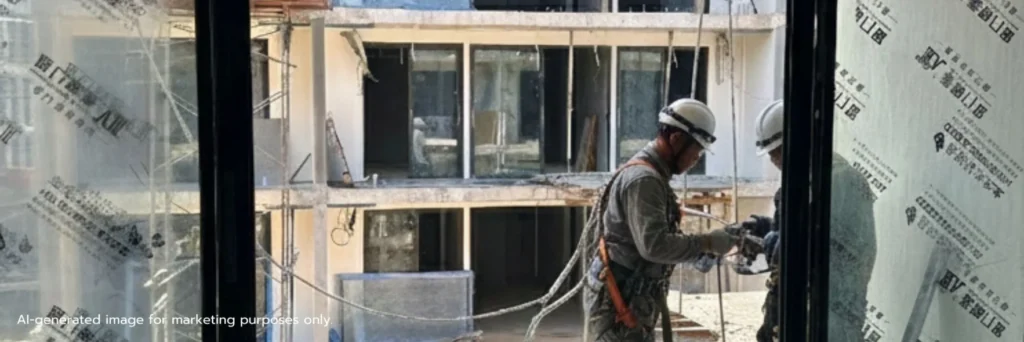
    ความสวยงามของกระจกฟาซาด จะสมบูรณ์แบบได้ต้องอาศัย "ระบบการติดตั้ง" ที่เหมาะสมกับโครงสร้างและระยะเวลาการก่อสร้าง รวมถึงการติดตั้งที่ปลอดภัย ได้มาตรฐาน

    Stick System

    In a stick system, aluminum framing and glass panels are installed piece by piece on site.

    Advantages: High flexibility and easier adjustments during installation.
    Limitations: Longer installation time and quality depend heavily on on-site workmanship.
    Applications: Suitable for low- to mid-rise buildings, renovation projects, or buildings with complex facade geometry.

    Unitized System

    In a unitized system, glass and aluminum frames are pre-assembled in the factory and delivered to the site as finished panels.

    Advantages:
  • Much faster installation
  • Consistent factory-controlled quality
  • Better water and air performance
  • Limitations:
  • Requires precise early planning
  • Installation requires lifting equipment
  • Applications: The standard solution for high-rise buildings, large office towers, and hotels requiring speed and quality.

    Spider System

    This system uses stainless steel fittings to support glass panels without visible aluminum frames.

    Advantages: Maximum transparency, elegant and modern architectural appearance.
    Limitations:
  • Higher cost
  • Requires precise structural engineering
  • Not typically suitable for very tall buildings
  • Applications: Often used in building lobbies, showrooms, and main entrances where visual impact is important.

    Conclusion

    Facade design is not merely about aesthetics — it is a long-term investment in building performance.
    Choosing the right architectural glass not only enhances the visual identity of a building but also improves energy efficiency, reduces operating costs, and prepares the building for future technologies.
    At Facade Solution, we focus not only on today’s requirements but also on the future of building technology — from internationally standardized curtain wall systems to emerging innovations such as solar facades and energy-harvesting glass.
    The world of glass is evolving rapidly, and we are committed to evolving with it—delivering the best facade solutions for every project.
    Facade Solution เราไม่ได้มองแค่โจทย์ของวันนี้ แต่เรามองไกลไปถึงอนาคต ไม่ว่าจะเป็นระบบผนังกระจกมาตรฐานสากล หรือเทคโนโลยีใหม่
    Interested in facade design consultation, Curtain Wall installation, or learning more about glass technologies? Our team is ready to help you explore the right solution for your project.