

What is a Facade?
Functions of a Facade:
- Represents the building’s identity, style, and brand
- Controls natural light and ventilation
- Protects against environmental factors such as water, heat, wind, and dust
- Influences energy efficiency and indoor comfort
- Can integrate advanced technology, such as energy-generating glass (solar facade)
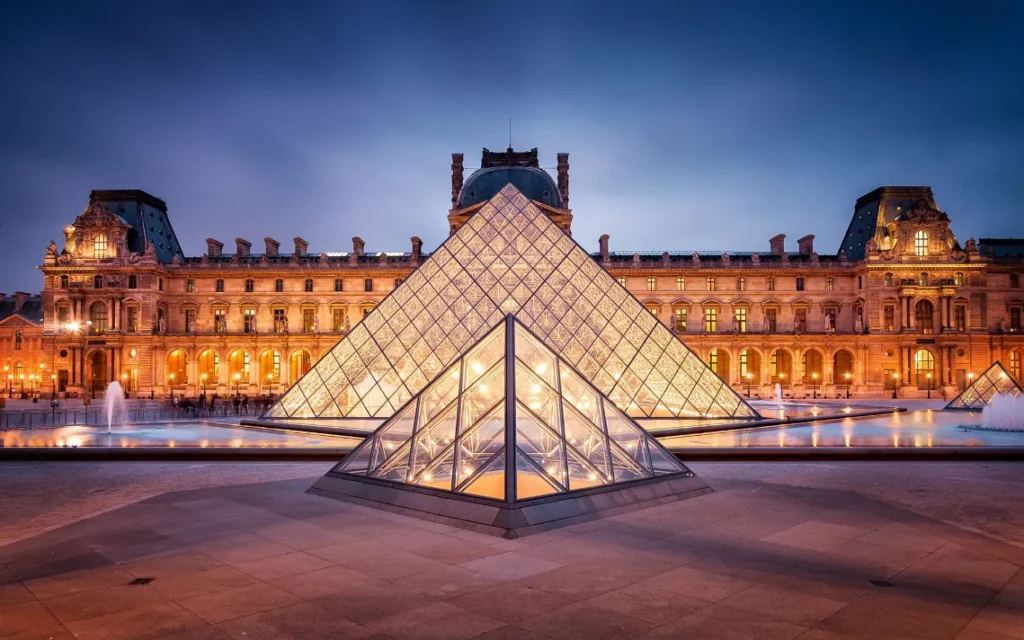
World-Class Facade Example: Louvre Pyramid
What is Cladding?
Think of cladding as a protective jacket or armor for a building. Unlike structural elements, cladding does not bear loads. It acts as an external shield, safeguarding the inner structure from damage caused by the environment.
Primary Functions of Cladding:
- Prevents water penetration, especially in high-rise buildings exposed to strong winds and rain
- Shields from direct sunlight and reduces internal heat gain
- Enhances thermal and acoustic insulation
- Extends the lifespan of the internal structure
- Adds texture, color, and design elements that reflect the architect’s vision
Key Properties of Cladding:
- Weather resistance (sun, rain, wind, UV radiation)
- Strong and durable, yet lightweight (e.g., aluminum composite panels)
- Easy to install, maintain, and replace
- Available in various materials such as metal, glass, natural stone, ceramic, fiber cement, and engineered wood
Popular Cladding Materials:
- Aluminum Composite Panels (ACP): Lightweight, durable, sleek finish
- Natural Stone: Luxurious and robust aesthetic
- Fiber Cement: Heat-resistant, moisture-proof, easy installation
- Timber or Engineered Wood: Offers a warm, natural feel
- Ceramic Panels or Terracotta Tiles: Provide a modern look with low reflectivity
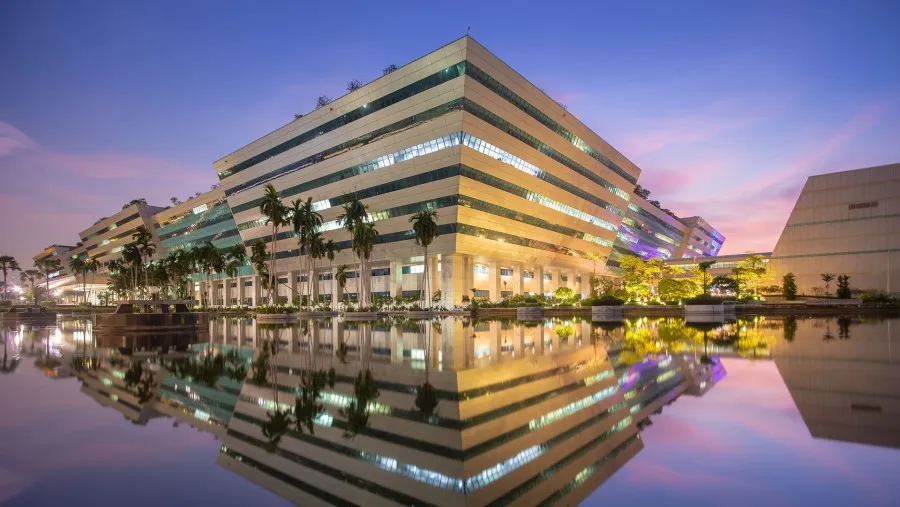
Real Project Examples Using Cladding: Government Complex, Chaengwattana (Bangkok)
Why Distinguish Between Facade and Cladding?
Precise Design: Helps architects and engineers plan and budget effectively
Material Selection: Clear understanding aids in choosing suitable materials for aesthetics and durability
Energy Efficiency: A well-designed facade can significantly reduce energy consumption
Examples of Facade and Cladding Applications
Office Buildings:
Facade – may feature rhythmic openings and shading devices based on sun orientation.
Cladding – such as aluminum panels, protects from rain and heat.
Residential Homes:
Facade – use large windows and wooden sunshades.
Cladding – materials like stone or wood offer texture and warmth.
Commercial Buildings:
Facade – reflect brand identity through shapes, colors, and signage. Durable cladding materials are chosen to withstand high foot traffic and weather exposure, such as coated metal panels.
Summary
- Facade refers to the entire visible exterior of a building, encompassing architectural elements such as windows, doors, walls, and decorative features.
- Cladding refers to the material used to cover the building’s surface, offering durability, environmental protection, and aesthetic enhancement.
Although cladding is an essential part of the facade, a facade involves much more—including openings, shading, ventilation strategies, and emerging technologies like energy-generating facades.
Understanding these differences equips you to better plan, design, and specify materials—especially in projects aiming to combine function, sustainability, and design excellence.